
Physical therapies in Traditional Chinese Medicine: GuaSha & Cupping
By Christine Guirguis
What is GuaSha?
GuaSha is a traditional therapy in which a massage tool with a blunt rounded edge is used to create friction over the body’s surface. As GuaSha is not a deep massage it is thought to release tension in areas where the connective tissue has become stiff. The stiff, unyielding nature of the connective tissue means, that when it is massaged with a GuaSha tool, there will be an extravasation of blood, causing the characteristic ‘Sha’, which looks similar to a bruise or rash. The body reassimilates the blood in the Sha, and the discolouration usually disappears within 2-3 days.
Is GuaSha Painful?
Different people experience GuaSha differently; some find it uncomfortable, while others describe it as a satisfying release of tension with pleasant warmth emanating from the area.
If you are getting GuaSha, it should never be painful – if you experience pain, please let me know, and a lighter pressure will be applied or a different therapy will be used.
Are there any side effects to Gua Sha?
GuaSha may cause discomfort and will cause discolouration similar to bruising or a rash. If there is discomfort during GuaSha, please let me know and the pressure can be adjusted so discomfort is not experienced.
There are no reports of medical complications related to GuaSha.
GuaSha tools are cleaned and disinfected between patients to eliminate the possibility of cross-infection
Who can use GuaSha?
Anyone with pain and tension – whether acute or chronic can use GuaSha.
Athletes, sports people and people with chronic tension, pain, decreased range of movement, or delayed onset muscle soreness can use Gua Sha.
What is cupping?
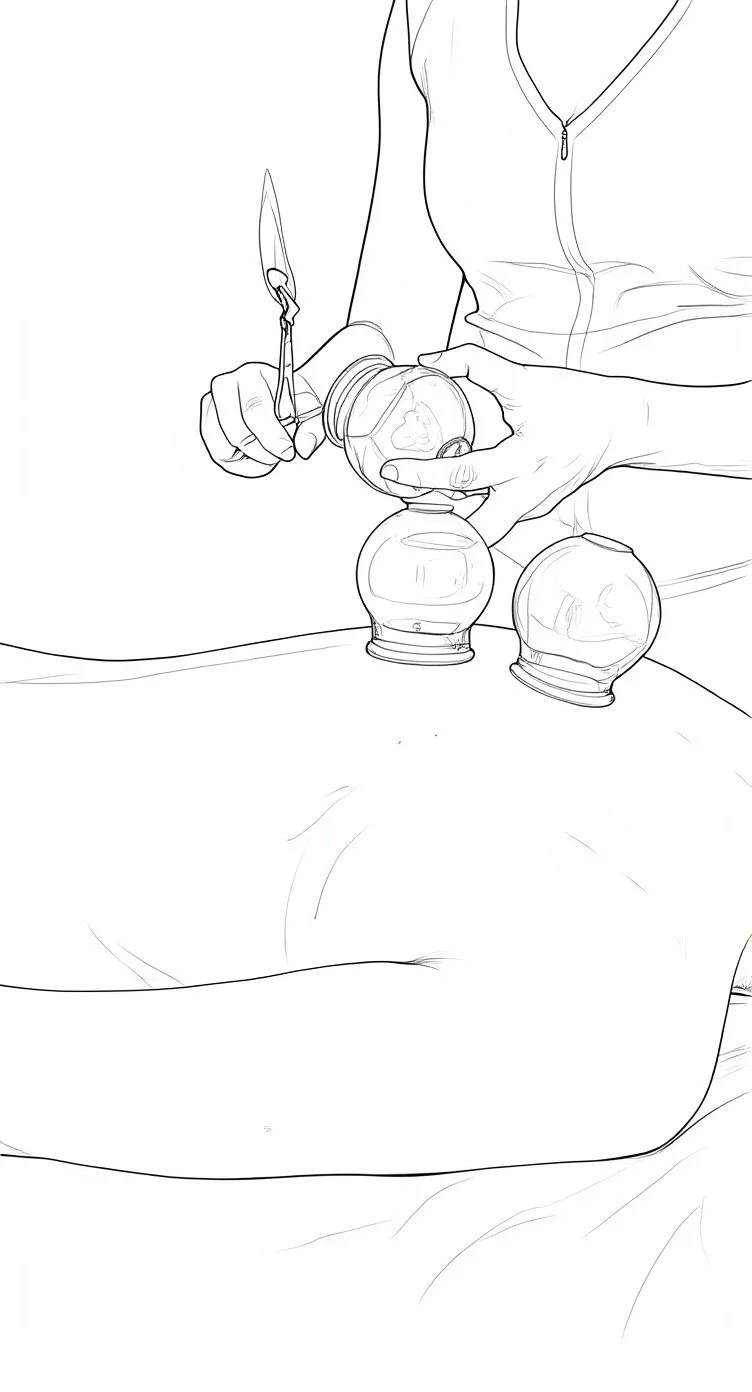
Cupping is the application of suction cups to the surface of the body. In my clinic, I use glass cups. I create a vacuum in the traditional way, by placing a flame inside the cup to consume the oxygen. The cup is then rapidly placed on the surface of the skin.
The effect of cupping is very much like a massage, in that the muscle fibres are physically drawn away from each other, when the cup is released however, there is the advantage of a ‘rush’ of Blood and body fluids into the area which was under the vacuum. This may help maintain the space created between the muscle fibres, preventing the muscle fibres to ‘stick’ together again in a tense fashion.
Is cupping painful?
Cupping is an unusual sensation – it is often described a pinching sensation, or a strong suction. If you do experience pain during cupping, this may indicate that the suction is too strong, please let me know and I’ll release the vacuum incrementally until pain is no longer experienced.
Are there any side effects to cupping?
There will be discolouration, and sometimes fluid-filled blisters may appear, which will mean that the cups were left on for too long a period. Cups are usually applied for 3-10 minutes. There is a risk of a burn due to an open flame being used. My complete focus is on applying the cupping safely, so to avoid this risk.
The glass cups are cleaned and disinfected between patients to eliminate the possibility of cross-infection.
What is the difference between Cupping and GuaSha?
Aside to being two very different tools, the main difference between GuaSha and cupping is that GuaSha acts primarily on the connective tissue, while Cupping acts primarily on the muscles.
GuaSha & Cupping Aftercare
It is important to keep treatment area covered and protected from the wind. This is because your body will contract in response to any sudden cold and counter the progress made in treatment.
Similar to massage – patients are advised to drink plenty of (warm) water. This will help the Sha or cupping marks to resolve, and may eliminate toxins that have accumulated over time in tense tissue that is generally poorly supplied with blood circulation.